Wednesday, July 16, 2008
Wrapping Up H.P.
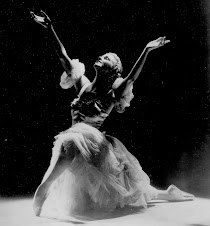
I just submitted the paper I presented on H.P. at the Society for Dance History Scholars for inclusion in the conference proceedings. Although the essay contains only a fraction of the research I gathered on this rich subject, I was happy after all these years to complete it. I thought I would be leaving H.P. behind, but there has been talk about revisiting this intriguing ballet--whether through a brochure or an actual revival or some other way--by folks in the U.S. and Mexico who could actually make it happen. Stay tuned!


Saturday, March 22, 2008
One Down, Two to Go
I gave the first of my two lectures at the Philadelphia Museum of Art about H.P. It went very well. The audience appreciated learning about this interesting episode in Philadelphia history. No one had heard of Catherine Littlefield before the lecture, however, which came as a surprise to me. I have a lot of work to do! I give the same talk again at PMA on March 29, and then a new version of the lecture in June at the Society of Dance History Scholars conference in Saratoga, NY.
Monday, March 3, 2008
Better Blog to Recommend
My husband, David Skeel, and his friend, Bill Stuntz, are both thoughtful law professors and evangelical Christians. They have started a blog together called Less than the Least. They will discuss current events, theological, cultural and political, as well as personal struggles. Bill, for example, suffers from chronic back/leg pain and was recently diagnosed with colon cancer. I highly recommend this blog (www.law.upenn.edu/blogs/dskeel)
As for my own work, it is going well. I meet with the folks at the Philadelphia Museum tomorrow to construct the PowerPoint presentation for my lecture. After that, it's just a matter of practicing. Today it will be warm, so I hope to build in some time to go outside for a run!
As for my own work, it is going well. I meet with the folks at the Philadelphia Museum tomorrow to construct the PowerPoint presentation for my lecture. After that, it's just a matter of practicing. Today it will be warm, so I hope to build in some time to go outside for a run!
Friday, January 18, 2008
Link to Lecture
You can find details about my lecture at www.philamuseum.org. Go to education, adult programs, then art history lectures. I just learned that my abstract about H.P. was accepted to the Society for Dance History Scholars annual conference in Saratoga this June.
Friday, January 11, 2008
Revised Dates for Kahlo Lecture
The dates for my lectures at the Philadelphia Museum of Art are Thursday, March 20, and Saturday, March 29. It will be the same lecture given twice as part of an art-history course on Mexican Modernism. The course comprises four different lectures, with four different lecturers. Descriptions of it and all the other activities associated with the Frida Kahlo exhibition can be found on the museum's website, as well as in brochures recently mailed to members.
I'm excitied to finally share my research about H.P., especially in a lecture format, since it provides an opportunity to incorporate images as well as music. We'll be able to recreate the performance as much as we can, without the actual dancers!
I'm excitied to finally share my research about H.P., especially in a lecture format, since it provides an opportunity to incorporate images as well as music. We'll be able to recreate the performance as much as we can, without the actual dancers!
Monday, November 26, 2007
PMA Lecture Dates
The dates for the lectures about H.P. at the Philadelphia Museum of Art are Thursday, March 13 and Saturday, March 15. The talk will run about 55 minutes and I will show a great number of images.
Monday, November 12, 2007
Philadelphia Museum of Art Lecture
I will be giving two lectures (same lecture twice) at the Philadelphia Museum of Art in March in connection with the Frida Kahlo exhibition. I will be discussing the ballet H.P. as part of a PMA art history course on Mexican Modernism.
Tuesday, October 16, 2007
Frida Kahlo-Littlefield Connection
I just read that the Philadelphia Museum of Art will host a major exhibition of Frida Kahlo's work next spring. In 1932 Frida, married for two years to Diego Rivera, came to Philadelphia to help promote H.P., a modernist ballet about U.S.-Mexican relations for which Rivera designed the costumes and scenery. Though she didn't talk much, everyone was taken by her exotic appearance--the clunky beaded necklaces and colorful flouncy skirts. At 90 pounds, she was dwarfed by her rotund mate. Littlefield created the dances for H.P.--it was her debut as choreographer.
Tuesday, October 2, 2007
Out of the Gate
My two sons, ages 14 and 12, returned to school just after Labor Day. Since then, I've been organizing my little study (my space needs to be clear in order for me to think!) and prioritizing Littlefield tasks. I launched a Catherine Littlefield webpage and the blog you're reading right now, thinking that Catherine deserves some presence on the web. There's always reading to be done, but yesterday I shifted gears and began writing an abstract for a dance conference next spring. Details to come. Right now I need to work.
Friday, September 28, 2007
Goodbye Rome, Hello Catherine!
Let this posting serve as a transition from my first blog, which chronicled our family's four-month stay in Rome, to my new blog, which will encompass information and musings about Catherine Littlefield and the research I have been conducting for the last 15 years. I changed the blog's, address, title, and design, but I couldn't bear to delete the old postings, which stand as a record of our Roman adventure. Someday I'll want to go back and read it through, and so will my boys. So, if you're here because of Catherine Littlefield, feel free to stop now. Or go on to an entirely new subject.
Friday, May 18, 2007
Stephen's Top 5
1. The Colosseum. With more than three-quarters still remaining it is not difficult to imagine
how it was back then.
2. My rounds. Well, that is what I call them. What I do is I walk around the apartment grounds, maybe to the playground or to see who's around. What I like doing best is dodging and hiding from the "Evil Lady" and her "Evil Dog Sidekick." I know what you are thinking, "who are they?" Well, one day I was in the playground swinging a baseball bat (more or less a stick), and she must have thought I was hitting the tree because she started screaming at me like I had just pushed her dog off the edge of a cliff!
3. The Bay of Naples view. It is so pretty when you are standing on a cliff basically looking over the bay. Once, at night, we were eating dinner at a restaurant looking over the bay when all of a sudden fireworks went up in the air.
4. Ostia and Pompeii. The whole towns survived! It is too much to take in.
5. Making movies of all our adventures. Be sure to watch them!
Tuesday, May 15, 2007
Carter's Top 5
1. Vatican Museums- great Etruscan, Egyptian, Roman, and art collections. Raphael's School of Athens combines all of the Greek philosophers into one scene. Portraits of Raphael's contemporaries include Da Vinci (Plato) and Michelangelo (Heraclitus). Sistine Chapel- figures seem to jump out of wall. Also has good frescoes by others.
2. Naples Archeological Museum- most of the art from Pompeii and Herculaneum along with some stuff from Rome. Alexander the Great mosaic (in all books about him) and other famous mosaics and frescoes are here.
3. Caravaggios in churches- walk into a church for free and see one or two (or three) amazing pieces of artwork. It isn't overwhelming like a museum. Best two- Madonna of the Pilgrims- male pilgrims has dirty feet. Crucifixion of Peter- a line zig-zags all the way from the feet of a Roman to the rope which is lifting up the cross. Peter has a good expression.
4. Ostia Antica- port of ancient Rome, covered by silt and sand, this is a small intact town with great mosaics and the ancient "Wall Street." You can walk into all of the ancient houses and buildings. Also contains ancient public toilets.
5. Galleria Borghese- contains almost all of Bernini's masterpieces. A couple of Raphaels and numerous Caravaggios. My favorite is Raphael's Deposition of Christ. Each figure has a unique personality. Amazing color too.
Sunday, May 13, 2007
Naples and Our Top Sites
My expectations for Naples were low, based on a very brief trip there previously as well as reports in guidebooks, etc. However, we had a marvelous time, mainly owing to the hospitality of an Italian economics professor who lent us his apartment on the Bay of Naples and who hired a driver to take us to Pompeii. The ruins at Pompeii are much larger than those at Ostia and much more crowded. Oddly, most of the gems discovered in Pompeii such as mosaics and glassware were removed and are now in the Archaeological Museum of Naples, which many people bypass. This museum was a highlight for all of us, another underappreciated site. As we approach the end of our trip, we've decided to list our top five sites/events/experiences individually. I'll go first; you'll hear from the other three Skeels in the coming days.
Sharon's Top Five (not really in order)
1. Beethoven's Ninth Symphony conducted by Lorin Maazel on Easter Day near the Vatican
2. Sant'Ivo alla Sapienza, an extraordinary Baroque church designed by Borromini
3. Bay of Naples
4. Three Caravaggios: Crucifixion of St. Peter, Conversion of St. Paul and St. Matthew and the Angel
5. Ruins at Ostia Antica -- these were good the first time we saw them and they are still good.
Honorable mention: San Clemente Church, Sistine Chapel, Rite of Spring ballet, the flowers, fabrics and food.
It goes without saying that we enjoyed immensely dinners with our American visitors. Thanks so much for coming!
Wednesday, May 2, 2007
Books
Responding to Sylvia's comment, we have discovered Caroline Lawrence's books--they are sold in all the English bookstores here. Because we have no television to speak of, both boys have become genuine readers. Stephen is now devouring Gilbert Morris's "The Seven Sleeper Series," which we checked out of the church library. He would read more of Lawrence's books but they are very expensive here, so he'll have to wait until he gets home. Also popular with both our boys is the Chip Hilton sports series by Coach Clair Bee. As a result of this trip, David and I are considering removing our television from the living room when we return.
May Day
My parents' trip lasted one week and during that time the Italians celebrated two separate holidays--April 28, which commemorates liberation from Fascism, and May Day, the Italian version of Labor Day. Throw in a Sunday and a Monday link to a Tuesday holiday and you have five out of seven days which were atypical, meaning we were not sure whether shops and landmarks would be open or closed. By Monday we saw all we wanted to see except Ostia Antica, the ruins of an ancient Roman port town about 30 minutes outside the city. But would it be open on Tuesday--May Day--the last day of their trip? Two guidebooks said no but the hotel concierge thought yes. His attempt to call came too late on Monday, so we planned to phone again Tuesday morning. Meanwhile, we made made a list of other things to do. (While traveling or living abroad, it's more important to be flexible than fit or smart. You need to have a Plan B, and in Italy you need to have Plans B, C and D.) Turned out that Ostia was indeed open on May Day and we spent a wonderful four hours exploring there. Afterwards, we headed to a particular restaurant, conveniently located on the route home. We arrived before six, however, and Italian restaurants open no earlier than seven. The neighborhood was empty and dark, but there was the chef, sitting outside, and despite the early hour, his wife beckoned us to a table. This was perhaps the earliest dinner ever consumed in Rome and proves that sometimes the Italians' maddening, fluid methods work to your benefit.
Monday, April 30, 2007
Mom and Dad in Rome
My parents arrived last Wednesday and are demonstrating extraordinary stamina. Just hours after landing, Mom was sampling water from a public drinking fountain. These fountains resemble fire hydrants and are rather dirty-looking, but the water is clean and the Romans love it. Dad remained wary, cautioning Mom "not to drink too much." Glad to report that Mom is still alive. They've seen the Colosseum, the Roman Forum, the Sistine Chapel and many churches, listening very patiently to our long commentaries. On Saturday we visited Orvieto, a walled hill-town an hour north of Rome. (Ask them about the eventful train ride there.) Dad especially likes the Italian soups.
Monday, April 23, 2007
Baseball, Italian Style
Carter and Stephen played in their first official Italian baseball game last Saturday. The parents built the field themselves, despite complaints by neighbors who wanted a soccer field instead. Baseball is not common here and the Italians who play it are renegades. But they know what they're doing and the boys love it. David and I felt as if we were watching a game back home...almost. Inning one was interrupted by a dog on the field, which ran about for some time before his owner corralled him. We could hear someone playing an accordion in the distance. Our coach moved equipment with one hand while holding a cigarette in the other. And when the score tightened, the fans began cheering wildly, "Die, Die, Die Bartolo! Die, Die Marco!" And this to the boys they were rooting for! We might use this cheer back in Lower Gwynedd and see how it goes over.
(According to the Italian dictionary, "dai" means "come on" or "go on." So it makes perfect sense, if you're Italian.)
(According to the Italian dictionary, "dai" means "come on" or "go on." So it makes perfect sense, if you're Italian.)
Saturday, April 21, 2007
Gypsies
Walk into an historic church or through any heavily trafficked area for that matter and you're likely to encounter a gypsy woman begging. Sometimes she will be hunched over with her forehead to the ground, arms outstretched with hands together in prayer, murmuring. Always there is a basket for coins nearby. A young gypsy woman sits by our supermarket entrance with her daughter nearly everyday. The little girl colors, looks through the glass door or eats food people give her while her mother just sits for hours. I've seen the mother get off the bus and walk to her spot, as if commuting to work. She is very attractive and appears healthy as an ox. I think to myself, why don't you knit or help people with their groceries or do something? Isn't it boring just sitting there all day? We've seen one old gypsy outside a church begging while talking on her cell phone. They can be prostrate and moaning one minute and an instant later, spry as can be, they scurry off. There seems to be a subgroup of musical gypsies who jump on trams, strum their guitars and sing for a stop or two, then jump off after passing around the basket. On one metro a tiny boy strolled down the aisle with a self-playing accordion. Carter and Stephen were somewhat offended that he wasn't actually playing the accordion for his money. Most troubling is how the gypsies exploit their children in this way. We've been told that their culture is based on cheating, stealing and begging. I've seen people give them coins and food and the Italians seem to tolerate them. What is the appropriate Christian response?
Tuesday, April 17, 2007
Il Casale del Ginepro
A few years ago Davide and Cristina sold their antique shop near Piazza Navona in the center of Rome and bought an 1830 farmhouse in the Umbrian countryside. They diligently restored it and plan to open a bed and breakfast, called Il Casale del Ginepro (Farmhouse among the Junipers), this summer. We spent a wonderful three days visiting them there, taking side trips to Assisi (our favorite town in all of Italy), Perugia and Deruta, which is known for its pottery. Cristina and Giovanna prepared pork roast, lasagna, spaghetti and meatballs (by request), artichokes, homemade salami and a special pie made of grain (we don't know what this was but it was delicious). The stone house has four guest rooms and sits on 2.5 hectares filled with olive and juniper trees. Davide and Cristina speak English, Portuguese, French and German and are gracious, interesting hosts. Ideally, guests would have a rental car and be comfortable around dogs, since Davide and Cristina own three German shepherds. Please contact me if you'd like more details!
Friday, April 13, 2007
Homeschooling
Generally homeschooling has gone better than I expected (thank you to Silvia, Jen and others who have been praying). On a typical weekday, David leaves the apartment early, I get up, have coffee, check email and do a few chores before the boys awake. They eat breakfast and try to start schoolwork by about 9 a.m., which seems late but we usually go to bed later here than at home. We try to put in at least three hours of work. Both boys do math almost everyday, which David corrects. Some days Carter teaches Stephen Latin (for pay) and two afternoons a week a Dartmouth student comes to the apartment to tutor Italian. I'm overseeing a few literature and writing projects. Some subjects we've put off until we get home, such as science and Carter's Latin. The boys have been for the most part cooperative, though Carter resists cello and Stephen is often distracted by the people, cats and dogs in the complex. It's also difficult to teach in this small space because everybody hears everybody's conversations, so concentration is futile. Of course the field trips are wonderful and really everyday in a foreign culture is a learning experience. In a few hours we leave for Perugia to visit Giovanna and her daughter Cristina and son-in-law Davide. They own a farm there.
Subscribe to:
Posts (Atom)